René Magritte
Biography and criticism
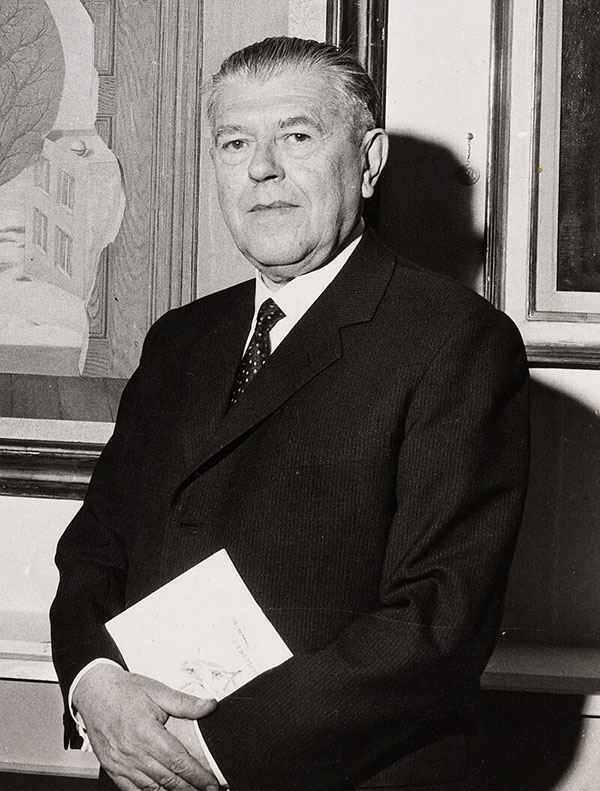
René Magritte was born on November 21, 1898, in Lessines, a small town in the Hainaut region of Belgium. He was the eldest son of Léopold and Adeline Magritte. His early life was marked by tragedy when his mother drowned in the Sambre River when he was just 14 years old, an event that had a profound impact on both his personal life and his artistic work. Magritte showed an early passion for art, and at the age of 12, he began his formal training at the Royal Academy of Fine Arts in Brussels. However, his experience at the academy was ambivalent, as he felt constrained by the academic traditions and sought to develop a personal style. In the early 1920s, Magritte moved to Brussels, where he immersed himself in the avant-garde artistic scene. The Surrealist movement, led by figures like André Breton, was gaining traction in Europe, and Magritte was drawn to it, particularly its exploration of the unconscious mind. His early works reflect the influence of Surrealism, though they still retained elements of realism. Paintings such as *The Window* (1925) and *The Lover* (1925) show the influence of Cubism and Futurism, but Magritte had not yet fully defined his signature style. By the mid-1920s, Magritte began developing his distinctive approach, characterized by the realistic depiction of everyday objects placed in unusual, thought-provoking contexts. His precise, almost photographic technique created a striking contrast with the surreal, conceptual nature of his compositions, producing works that were both puzzling and provocative. A key early example of his mature style is *The Treachery of Images* (1929), featuring the famous phrase “Ceci n’est pas une pipe” (“This is not a pipe”). In this iconic painting, Magritte plays with the relationship between representation and reality, challenging viewers to reconsider their perceptions of truth and visual representation. In 1922, Magritte married Georgette Berger, who would remain his lifelong partner and a recurring muse in his work. She appears in many of his paintings, often depicted in enigmatic, mysterious ways. The 1930s marked a critical period for Magritte as he fully embraced the Surrealist movement. He traveled to Paris, where he met key figures like André Breton, Salvador Dalí, and Max Ernst. Although he was actively involved in Surrealism, Magritte maintained creative independence, developing his own version of the movement that focused on the faithful representation of familiar objects in unconventional settings. Magritte’s background in graphic design and advertising also influenced his artistic style. Before achieving success as a Surrealist artist, he worked as a commercial artist, and his attention to detail and stylized approach to composition can be traced back to his experience in advertising. While his surrealist work may seem at odds with conventional commercial art, the influence of clear, precise design can be seen in his paintings. During World War II, Magritte returned to his hometown in Belgium, and Surrealism faced significant challenges in Europe. In this period, his work took a more realistic turn, moving away from the dreamlike compositions of his earlier years. Paintings like *The Art of Conversation* (1950) and *The Man in the Bowler Hat* (1964) focus on portraiture and everyday scenes, though they retain a characteristic sense of unreality. As postwar Europe gave way to postmodernism, Magritte achieved international recognition for his unique contributions to contemporary art. His work influenced a wide range of artists, from musicians to fashion designers, and became a reference point for later artistic movements such as Pop Art and Conceptual Art. Throughout his career, Magritte received numerous accolades and awards. Despite his success, he was known for his private nature and consistently refused to explain the meanings behind his paintings, leaving viewers free to interpret his work in their own way. René Magritte passed away on August 15, 1967, but his legacy lives on. His ability to challenge reality and question conventional ideas of visual representation continues to inspire artists and art lovers worldwide. With his unique blend of technical precision and surrealist concepts, Magritte’s works continue to invite reflection and contemplation, securing his place as one of the most influential artists of the 20th century.
Category of affiliation
- Painting
Artworks
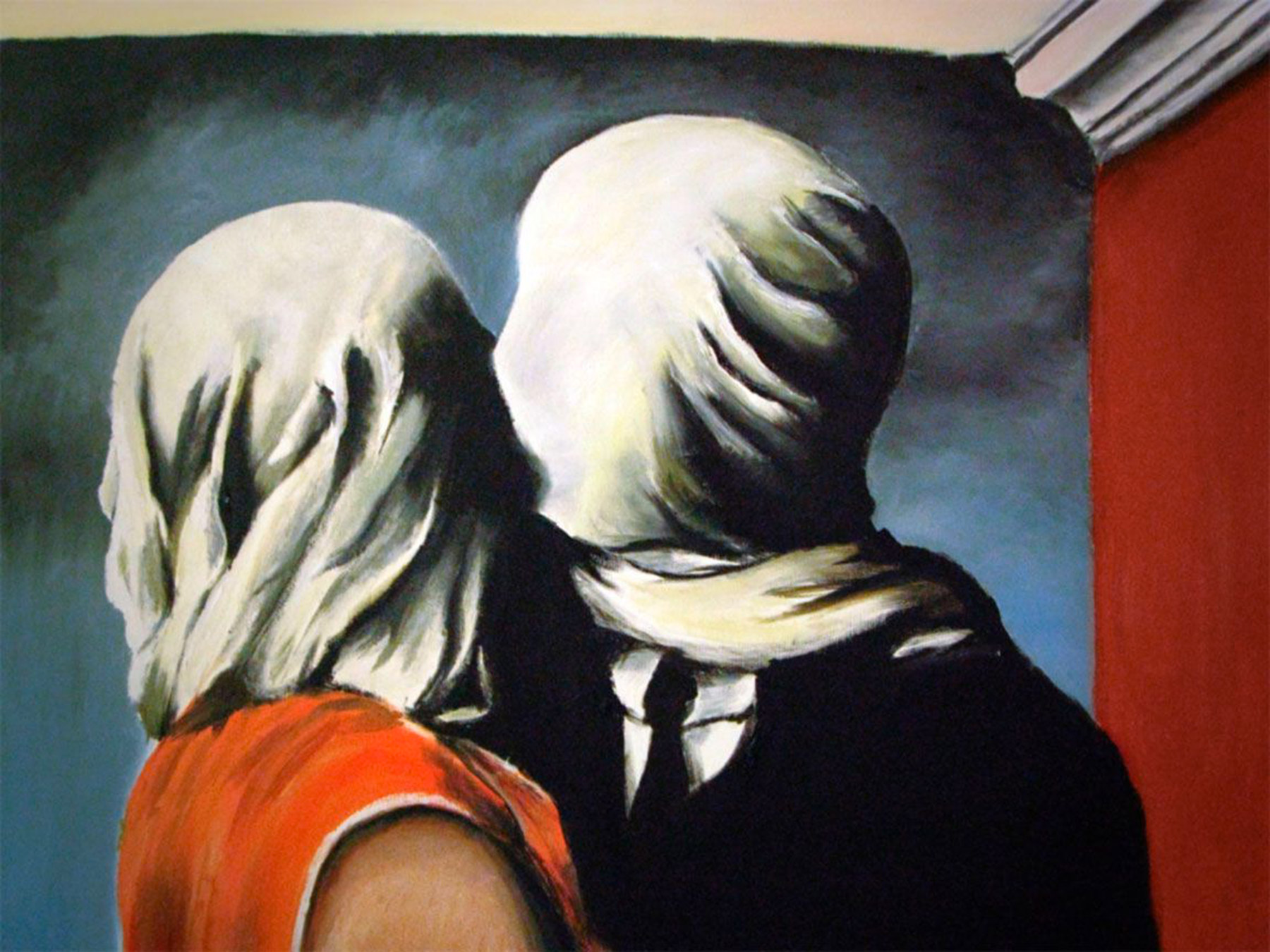
Gli amanti
- 1928
- 54 cm x 73 cm
- Oil on canvas
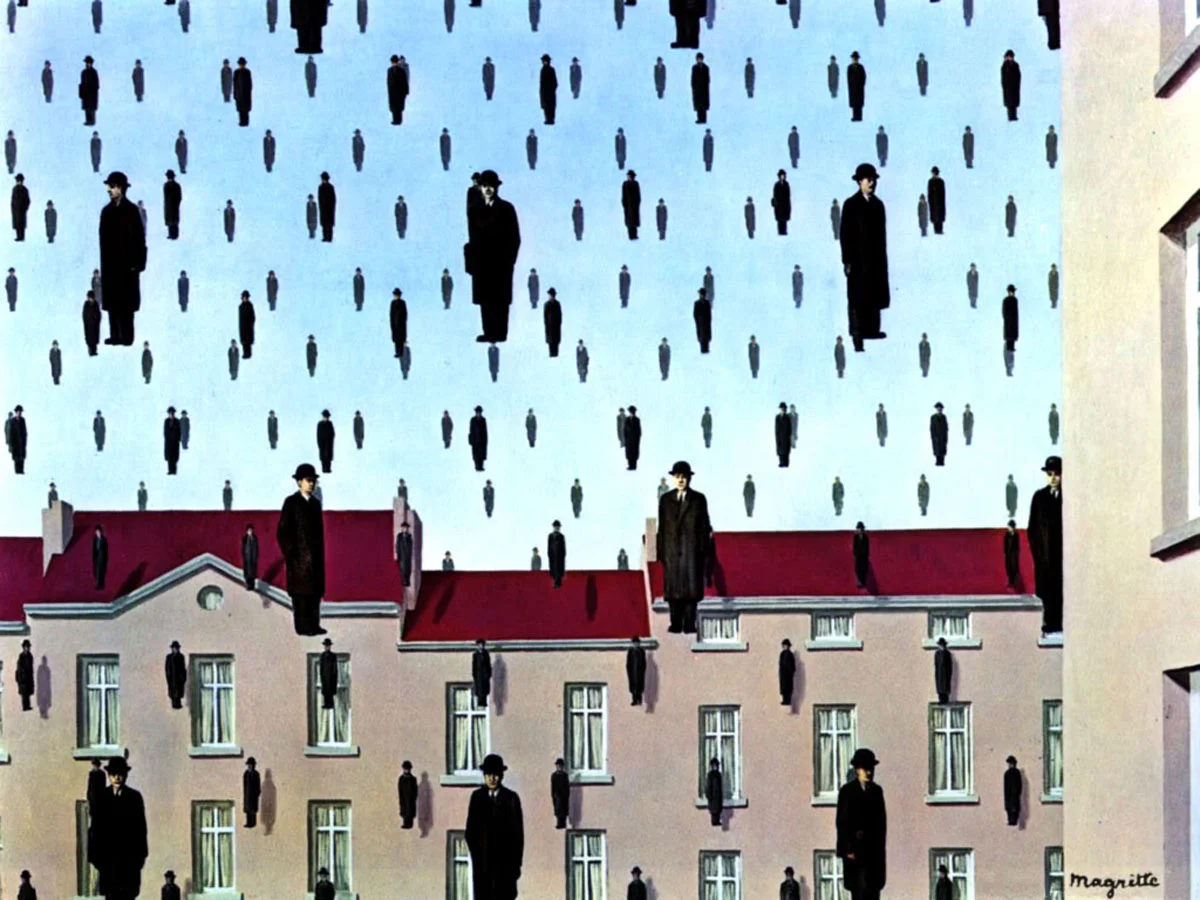
Golconda
- 1953
- 81 cm × 100 cm
- Oil on canvas

Il figlio dell’uomo
- 1964
- 116 cm × 89 cm
- oil paint


