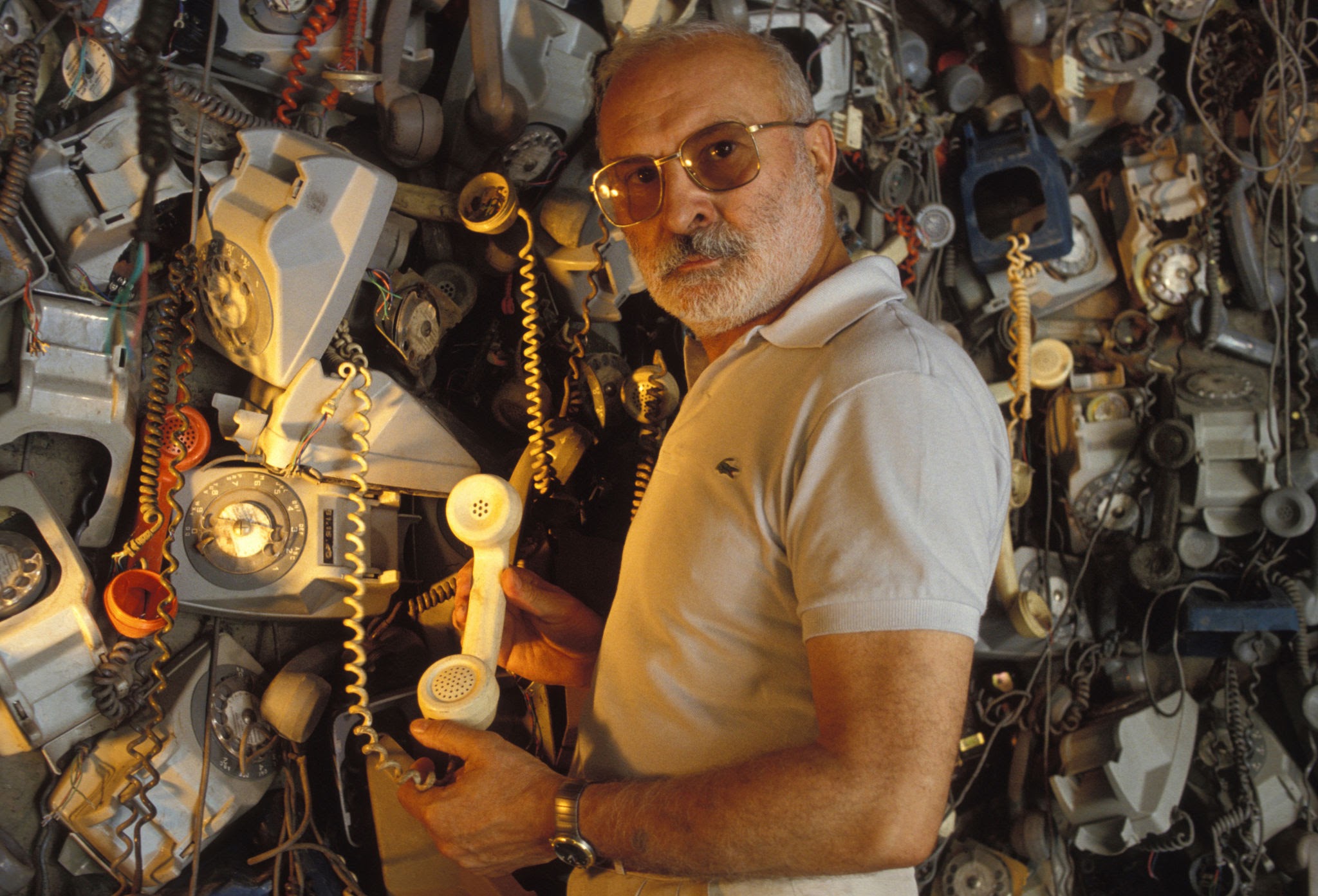
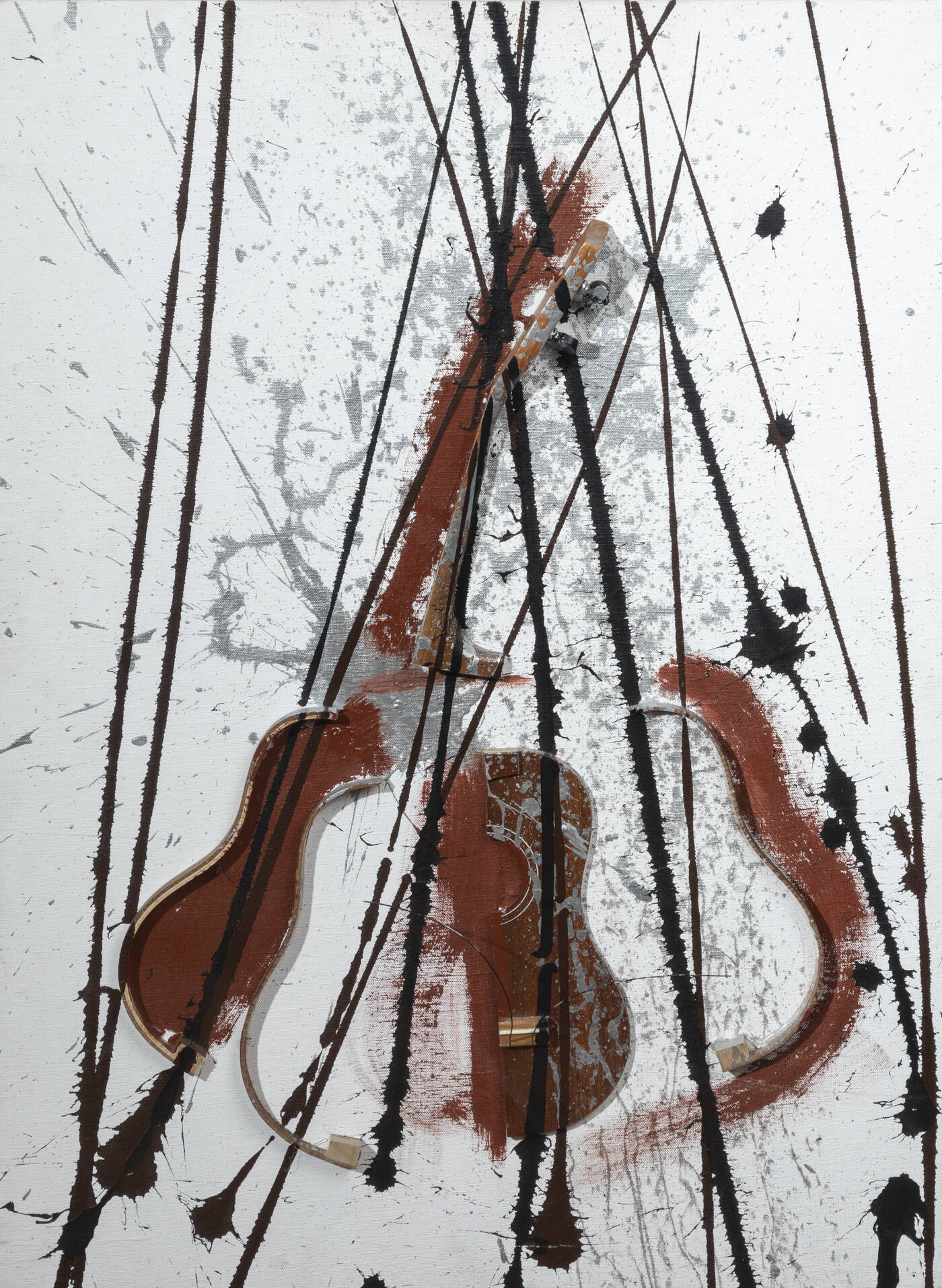
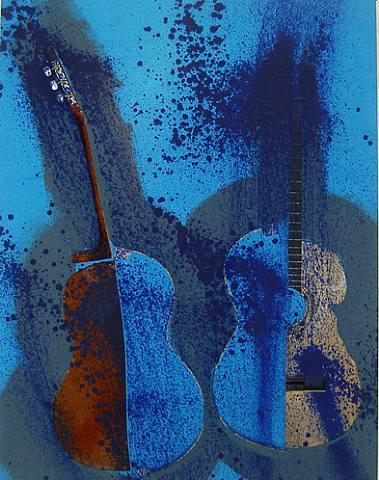
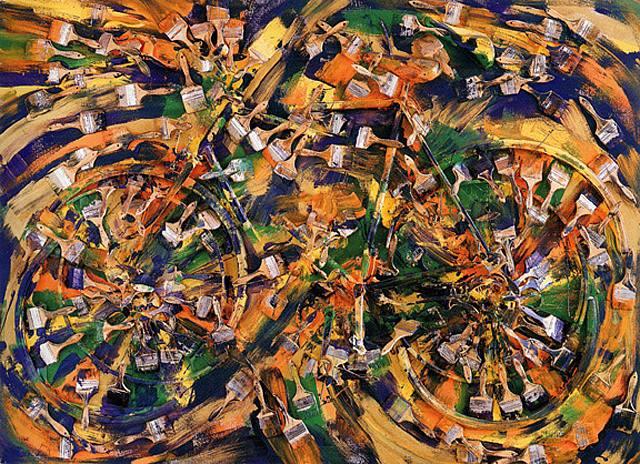
Fernand Arman was born in Nice on November 17, 1928. He began his artistic studies at the École des Arts Décoratifs, where he met Yves Klein, with whom he formed a lasting friendship and embarked on many adventures across Europe. Later, he continued his education at the École du Louvre in Paris. Initially, his work was figurative, and this phase lasted until the late 1950s. During this period, he started incorporating objects into his artworks, a shift that would define his creative trajectory. In 1959, Arman had a transformative experience when he came across a drawer full of used lightbulbs. This sparked a radical new approach to painting, where the object became central to the artwork. Arman began to assemble the lightbulbs, presenting them as a form of “painting” in their own right. This marked the birth of his “Accumulations” series, in which everyday objects, removed from their usual context, were displayed as art. His innovation led him to join the Nouveau Réalisme movement, founded by critic Pierre Restany, where he became a key figure. In 1963, Arman began creating his “Combustions,” a series that was inspired by his interest in fire, a theme he had explored with Yves Klein. His “Combustions” typically involved burning musical instruments, particularly violins, which he then encased in a resin mixture of plexiglass. In the 1970s, he began using concrete instead of plexiglass, leading to the creation of his “Cements.” These works featured various objects, not just musical instruments, seemingly frozen in time as they emerged from the solid concrete, symbolizing the intersection of mass, memory, and the passage of time. During the 1980s, Arman developed a new body of work called “Fragmentations,” in which he sliced objects and affixed the pieces onto canvas or wood, often incorporating traces of paint. These assemblages, which included items like shoes, books, and musical instruments, became a way for him to explore the disintegration and reassembly of everyday life. Throughout his career, Arman exhibited in prestigious galleries and museums worldwide, including a solo exhibition at the Venice Biennale in 1976. His international career also took him to the United States, where he was invited to teach at the University of California, Los Angeles, in 1968. That same year, he participated in the Venice Biennale and Documenta in Kassel. His frequent visits to the U.S. led to him becoming an American citizen in 1972. From the mid-1980s onwards, Arman turned his focus to creating large-scale outdoor sculptures for both public and private spaces. One of his most famous works from this period is “La Rampante” (1999), a monumental bronze sculpture of Ferrari cars that have been sliced and stacked, installed at the entrance of the Imola racing circuit. This piece exemplifies his fusion of art with popular culture. Arman passed away on October 22, 2005, in New York. On his gravestone, he had inscribed a sardonic epitaph: “Finally alone.”