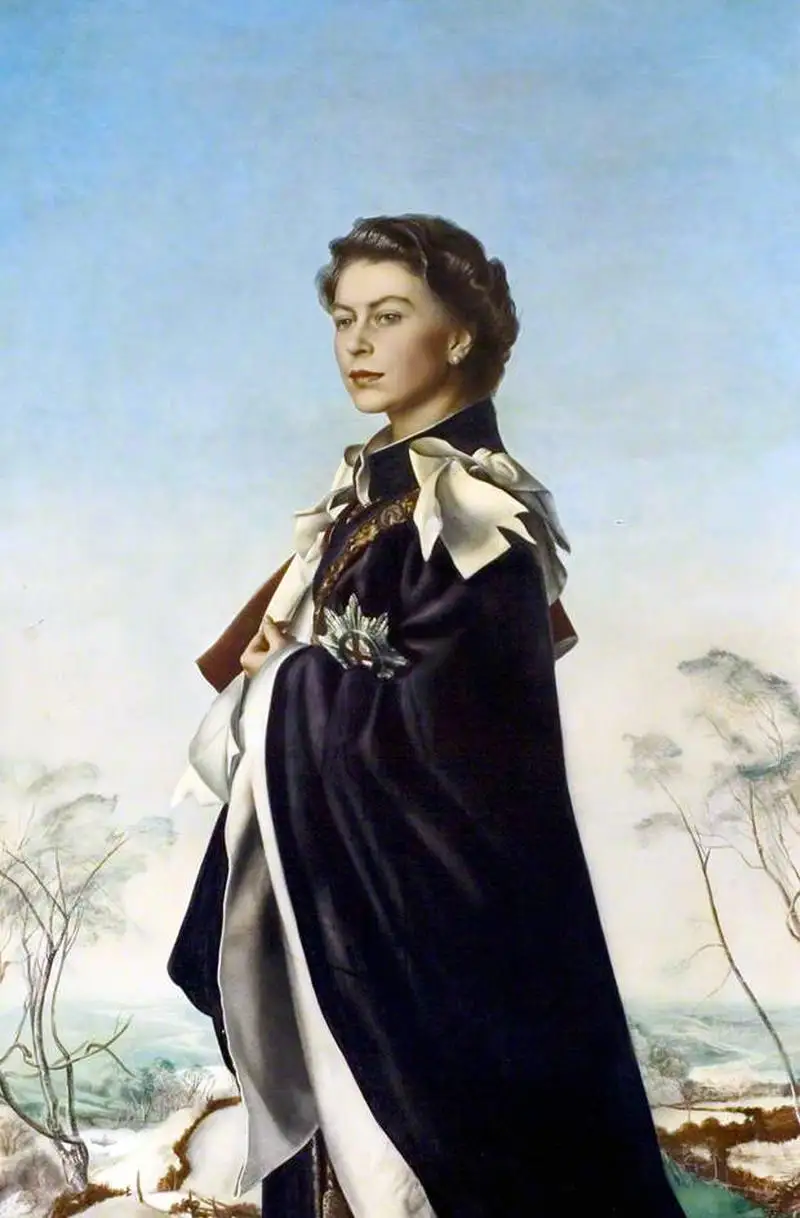
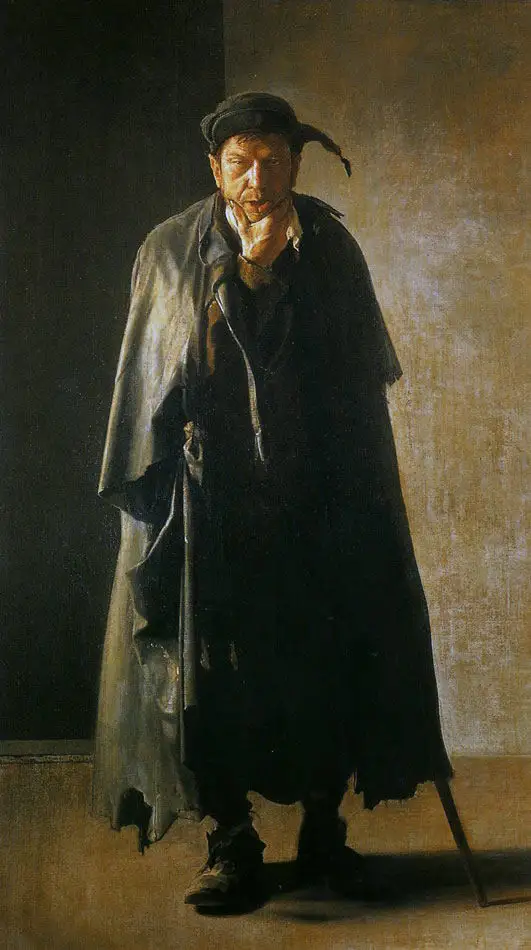
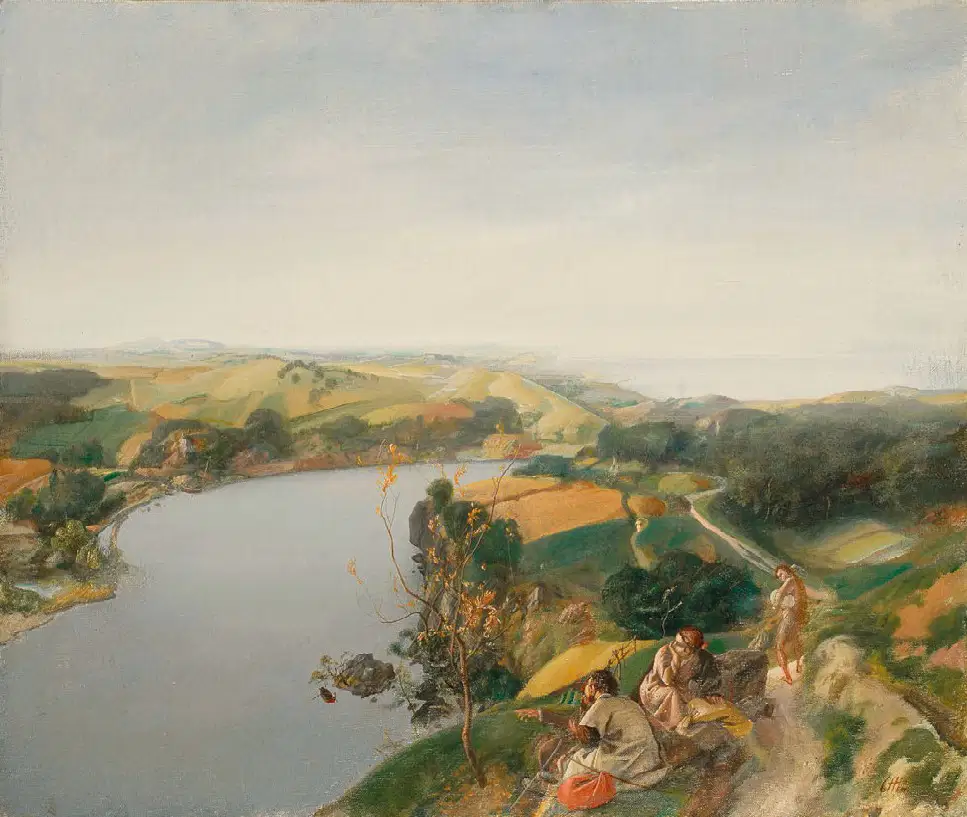
Pietro Annigoni, born in Milan in 1910, was the son of an engineer and an American mother. He grew up in Milan but moved with his family to Florence in 1925. After completing his classical studies at the Collegio dei Padri Scolopi, he chose to stay in Florence to pursue his artistic education, enrolling at the Accademia di Belle Arti. There, he trained in painting, sculpture, and engraving, building lasting friendships, including with sculptor Mario Parri. In 1937, Annigoni married Anna Maggini, a student at the Conservatorio Luigi Cherubini, and they had two children. However, the marriage was strained due to Annigoni’s demanding career, and the couple separated in 1954. Despite their separation, Anna remained an important figure in his life. Annigoni’s early career was marked by his first public exhibitions in the early 1930s, which gained him critical attention. His 1936 exhibition in Milan was particularly well-received, and he began to establish himself as a talented and meticulous artist. His travels, especially to Germany, exposed him to Northern Renaissance painting, which influenced his later work. He was known for his commitment to realism and the figurative tradition, a stance that led him to sign the 1947 *Manifesto dei Pittori Moderni della Realtà*, opposing the rise of abstract and informal art. In 1949, Annigoni painted the portrait of renowned shoemaker Salvatore Ferragamo, a commission that opened doors for him internationally. With support from Ferragamo and the artist Dimitri Kratschkoff, Annigoni moved to England, where he gained access to the prestigious Royal Academy. His portrait of Queen Elizabeth II, painted in 1953, catapulted his career and made him the official portrait artist of the British royal family. This portrait was widely reproduced and became an iconic image of the Queen. In 1961, Annigoni painted President John F. Kennedy for *Time* magazine, but the portrait was not well received by Kennedy, who appeared tired and distant in the painting. The following year, he was commissioned to paint Pope John XXIII, capturing the essence of the pontiff in a poignant and sensitive portrait. During the 1960s and 1970s, Annigoni continued to create portraits of famous figures, but he also turned inward, exploring more personal and metaphysical themes, such as in his series *Solitudini*. A deeply spiritual man, Annigoni saw fresco painting as the ultimate artistic challenge, reflecting his contemplations on God and the sacred. His frescoes, which he often painted for free in churches, were a way for him to engage with the divine. His final fresco cycle, completed between 1978 and 1988, can be found in the Basilica of Sant’Antonio in Padua. In his later years, he distanced himself from large commissions, retreating into a more contemplative life. In 1974, he remarried Rossella Segreto, and his last work was a portrait of her. Annigoni spent his final years creating sanguine drawings, often of faces, and painting landscapes. He continued to experiment with oil paints, focusing on the natural world. After a prolonged illness, he passed away in Florence on October 28, 1988.