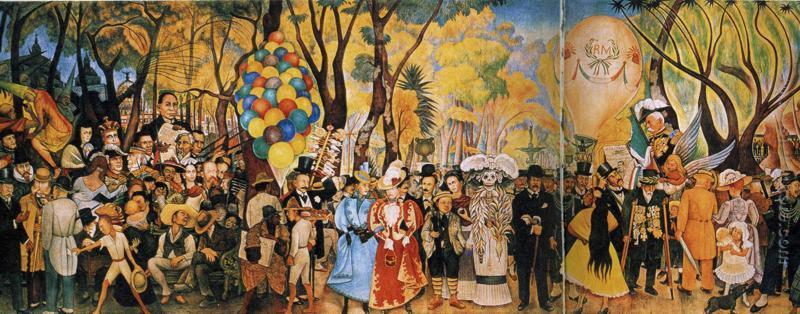
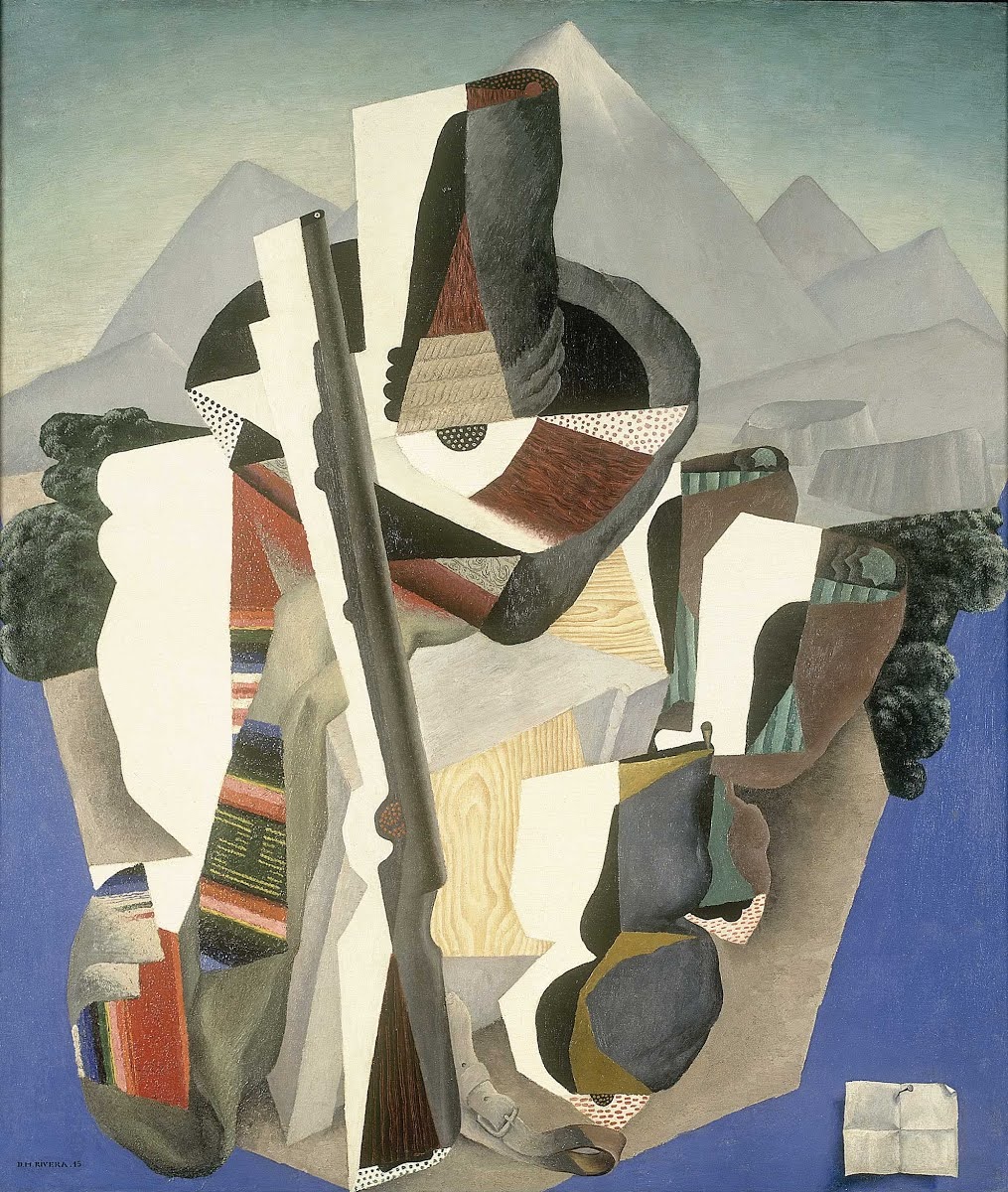
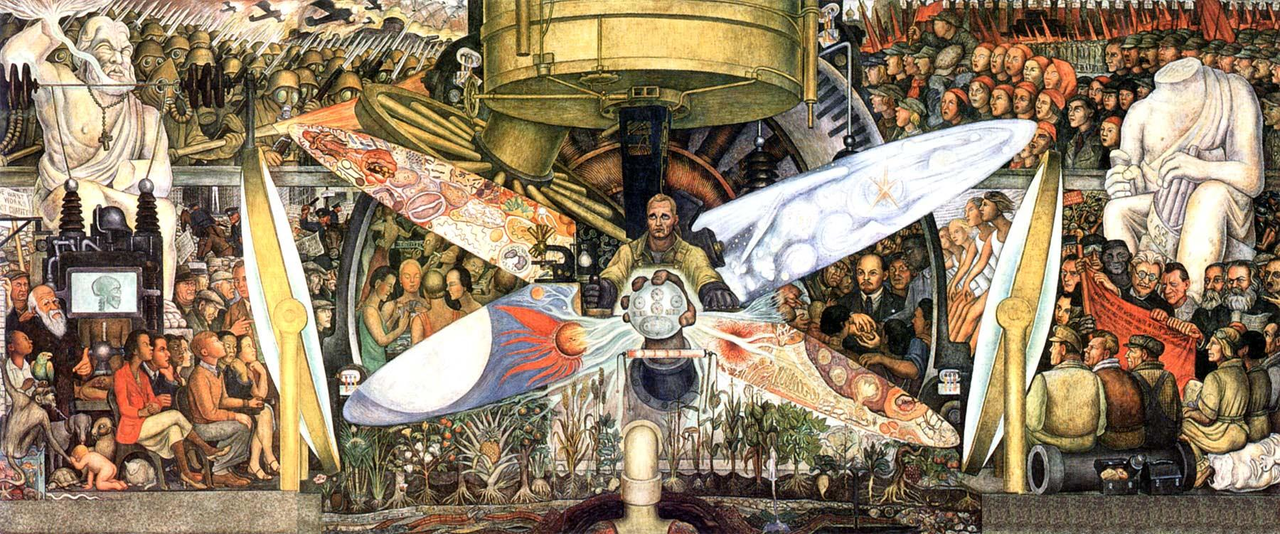
Diego Rivera (1886–1957) was one of the most significant Mexican artists of the 20th century. He demonstrated exceptional artistic talent from a young age, enrolling at the National Preparatory School in Mexico City, where he began his formal studies in art. His early years as an artist were shaped by his time in Europe, where he lived for several years and engaged with some of the key movements of the time, particularly Cubism. During this period, Rivera befriended major figures in modern art, including **Pablo Picasso**, who had a lasting impact on his style and vision. Upon returning to Mexico in 1921, Rivera embraced **muralism**, a movement aimed at making art accessible to the public by moving it out of the elite spaces of galleries and into public buildings. His goal was to use art as a tool for educating the population and promoting social and political values he strongly believed in. Rivera’s murals, often commissioned by the Mexican government, depicted the history of the country, from its indigenous roots to the **Mexican Revolution**. His art was deeply political, reflecting his conviction that art should be a vehicle for social change, a voice for the working class, and a celebration of Mexican culture. Over the years, Rivera worked on murals of great impact and symbolism, including those at the **National Palace** in Mexico City and the **National Preparatory School**. In these works, Rivera combined scenes of everyday life with historical depictions, emphasizing the importance of labor and popular struggle. His art became a symbol of resistance against oppression, with vibrant and colorful imagery that spoke directly to the people, celebrating Mexican identity and heritage. Rivera’s work was not confined to Mexico. In the 1930s, he traveled to the United States, where he painted murals in **Detroit**, **San Francisco**, and **New York**, often addressing issues related to industrialization and the conflict between capital and labor. His most famous American mural was likely the one he painted for the **Rockefeller Center** in New York in 1933. However, this mural, entitled **”Man at the Crossroads”**, was famously destroyed because it included an image of **Lenin**, which the project’s sponsors found unacceptable. This incident highlighted the tension between art and political pressure, and reinforced Rivera’s role as a politically engaged artist. During this time, Rivera maintained a passionate but tumultuous relationship with the artist **Frida Kahlo**, whom he married in 1929. Their union, marked by infidelities and separations, became a source of creative inspiration for both of them. While Kahlo’s work was more personal and introspective, focusing on intimate and painful themes, it complemented Rivera’s more socially oriented approach, and together they became one of the most iconic couples in art history. Kahlo’s personal struggles, reflected in her symbolic and often surreal self-portraits, stood in contrast to Rivera’s focus on collective struggles, but their partnership created a lasting artistic and personal legacy. In Rivera’s later years, his work continued to evolve, though he faced health challenges that impacted his ability to work. Despite these struggles, he remained dedicated to his art and political beliefs until his death on November 24, 1957. His legacy, both as an artist and a social activist, has endured long after his passing. Rivera’s work, which blended aesthetics with a strong social message, continues to influence artists and activists worldwide. His ability to combine beauty with social commentary, and to use art as a tool for social change, has cemented his place as one of the most important figures in the history of 20th-century art.